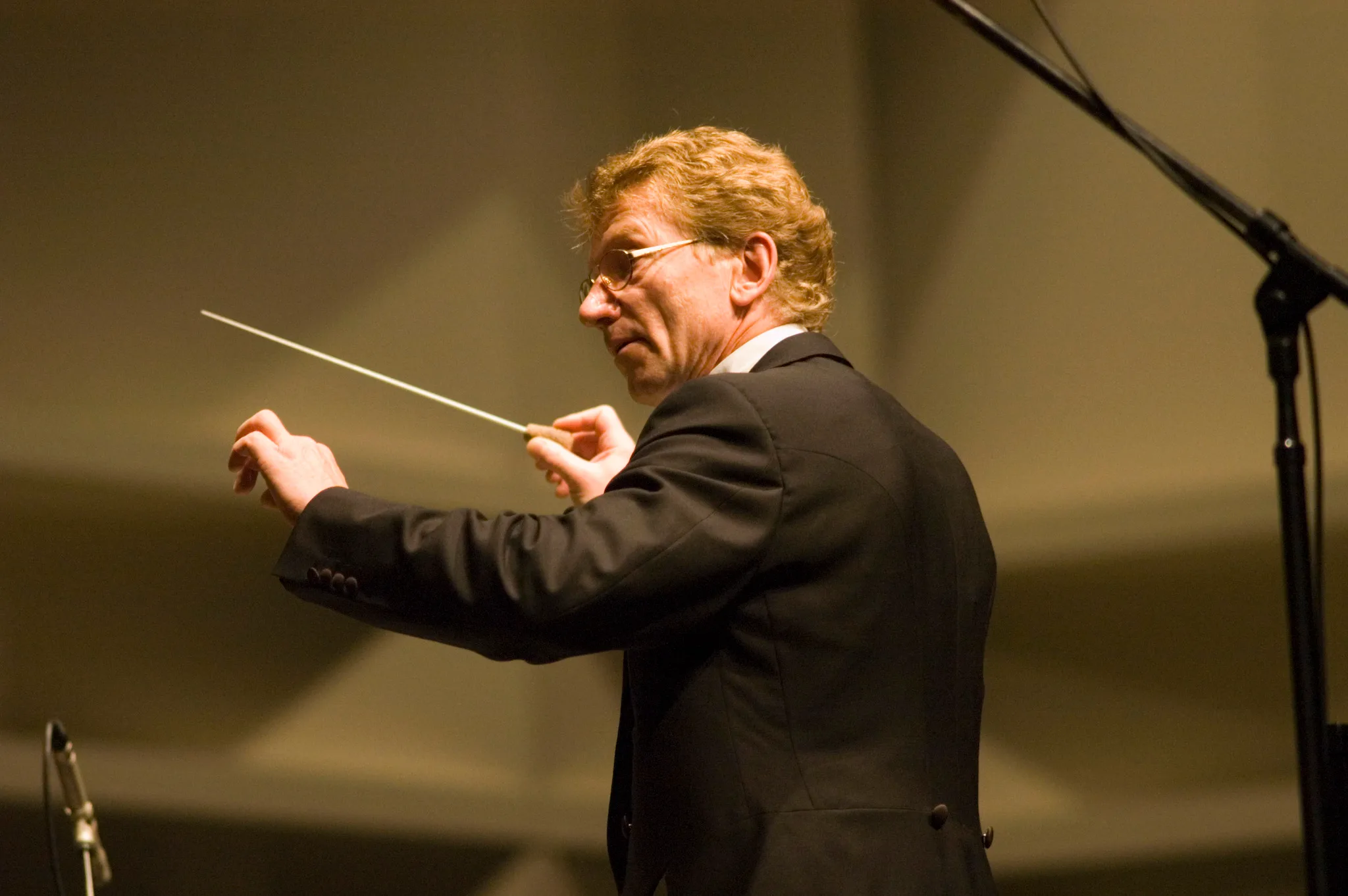
Conductor · Mentor · Vienna
Private online conducting lessons
Preparation for competitions, auditions, debuts and orchestral work, guided by a conductor who unites the traditions of the St. Petersburg and Viennese schools.
Professional path
Steady development, not a list of titles
Training in St. Petersburg with representatives of its renowned conducting school built the foundation of technique and musical thinking. Continued studies in Vienna allowed a deep exploration of the European performing tradition.
Years of work with orchestras and opera houses in different countries followed, along with teaching in the United States and leading international masterclasses. Today that experience is focused on individual mentorship.
The attention is not on the teacher’s career, but on each student’s professional goals — on what stands in front of you right now.
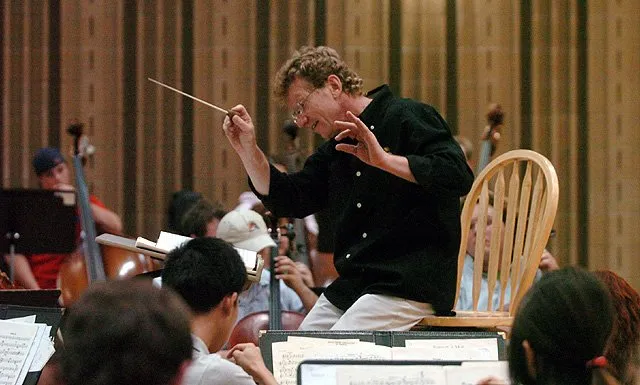
Outcome
What changes after the lessons
-
You’ll learn to read scores faster and see a work as a whole, rather than episode by episode.
-
It becomes easier to prepare for competitions, entrance exams and auditions through systematic work on a specific programme.
-
You’ll feel more confident in front of an orchestra and run rehearsals more effectively.
-
Your gesture becomes clearer to the musicians, and your movements more economical and expressive.
-
You’ll gain a clear plan for further development instead of a random choice of repertoire and methods.
-
You’ll receive an independent professional assessment of your preparation and concrete recommendations on what to work on next.
-
Every lesson moves you closer to your nearest goal — a debut, concert, competition or admission.
What sets it apart
Why students choose Nicholas Uljanov
-
Experience of two conducting traditions — St. Petersburg and Viennese — offers a broader view of a work than a single school allows.
-
The work is built around your goals, not a pre-set programme.
-
You can work on exactly the score you need right now.
-
Long-term guidance is available between important stages of your professional development.
-
Practical advice is grounded in real work with orchestras and opera productions.
Who it’s for
If you…
- are preparing for an international competition;
- are stepping in front of a professional orchestra for the first time;
- want to enter a conservatoire or continue your studies abroad;
- are preparing for an audition;
- are working on a difficult score and want to understand it more deeply;
- feel that your technique has stopped developing;
- are looking for a mentor who will help you progress systematically.
Format
Why one-to-one online is more effective
The online format is not a compromise — on the contrary, it lets you focus entirely on one person’s goals. The whole lesson is devoted to your development: no waiting for a group to fill, no need to adjust to a shared pace.
You can work on a piece you’re due to conduct next week, review a recording of your latest rehearsal, or prepare for a specific competition. You can study from any country and keep a steady rhythm even with a busy concert schedule.
How it works
How the first lesson goes
Before we meet, you send the score, a recording of your conducting if available, and a short description of your goal.
During the lesson we assess your current level, identify your strengths and the main areas to grow. At the end you receive a clear plan for further work and recommendations you can apply straight away.
What it helps to prepare
- The score of the work.
- A video of a rehearsal or performance (if you have one).
- A list of questions.
- Details of the competition, exam, concert or audition.
- Works you’d like to study.
In performance
See it in action
Haydn's Symphony No. 44 in E minor — with the Philharmonic Orchestra Altenburg Gera
Questions & answers
Frequently asked questions
Can I book just one lesson before an important concert?
Yes — a single lesson is a common and sensible format. Before a concert or debut, a fresh professional perspective is sometimes all you need: working through the difficult passages of the score, clarifying tempi and gesture, releasing unnecessary tension. We focus on the upcoming performance itself — not on general method, but on the specific bars and decisions that will make a difference at your very next rehearsal. You’ll leave with a clear plan of action for the days that remain. If you then want to continue systematically you can, but there’s no obligation to work regularly.
Can you help me prepare for an international competition?
Yes — competition preparation is one of the main areas of work. We’ll go through the competition programme as a whole: from the overall dramaturgy of a work down to individual technically demanding passages. We’ll pay separate attention to what a jury looks for — clarity of gesture, control of the ensemble, conviction of interpretation. Experience with orchestras and opera houses helps prepare you for the real situation on the podium rather than an abstract exam. We’ll build a week-by-week plan up to the competition date and set priorities so the time before it works for you as effectively as possible.
Can we work on my current repertoire?
Absolutely, and it’s the preferred option. Lessons are built around the score you need right now — the one you’re about to conduct at a concert, exam or competition. We don’t follow a generic curriculum; we work from your music: analysing structure, texture, difficult transitions, and developing a gesture that is comfortable and clear to the orchestra. This approach brings immediate practical value, because you apply what we cover at your next rehearsal. Send the score in advance — I’ll study it before the lesson so we don’t spend time on a first reading.
What if I have almost no experience with an orchestra?
That’s a normal starting point, and lessons are exactly what help you pass through it with more confidence. We’ll cover the basic but critically important things: how to organise a rehearsal, how to show entries economically and clearly, how to hear balance and lead the ensemble. Much of this can be worked on without an orchestra — through the score, the gesture, and understanding what to do, and in what order, on the podium. The goal is that by your first real meeting with the players you arrive with a clear plan and don’t waste precious rehearsal time on what could have been prepared in advance.
Are the lessons suitable for professional conductors?
Yes. Experienced conductors most often come with a specific task: a score that is new to them, preparation for a demanding project, or the wish for an independent professional view from outside. The format is flexible — this is not learning from scratch but colleague working with colleague on concrete material. Experience of two schools, St. Petersburg and Viennese, and practice across different opera and symphony ensembles make it possible to offer fresh solutions even in well-known repertoire. Many value precisely the chance to discuss interpretation and technical detail with someone who regularly stands at the podium.
Can I take lessons from any country?
Yes — location makes no difference. All you need is a stable internet connection and the ability to show the score and, ideally, your gesture on camera. The online format is especially convenient for musicians with a busy, unpredictable schedule: you can study between rehearsals, tours and projects, from home or another city. We’ll find a time that accounts for the difference in time zones. Many students continue regularly precisely because there’s no travel involved — it lets them keep their work continuous even in the busiest parts of the season.
How often is it best to meet?
The ideal rhythm depends on your goal. When preparing for a specific date — a competition, exam or concert — it’s usually more productive to meet more often, weekly or more, to see progress and make timely adjustments. For steady development of technique a calmer rhythm works well: once every one or two weeks with independent work in between. Single sessions for a specific request are also possible. In the first lesson we’ll determine a pace that realistically fits your schedule and produces results, and you can always adjust it as the work goes on.
Do I need to send a video?
A video is helpful but not required. A recording of your conducting — a rehearsal or performance — lets me see more quickly and precisely what already works well and what could be adjusted in your gesture and rehearsal management. If you don’t have a video, that’s fine: we can work with a live demonstration on camera during the lesson and with the score. Even a short clip noticeably increases the value of the first meeting, because we can talk about specifics rather than in general terms. It’s easier to send materials in advance so I can study them beforehand.
Which languages are available for lessons?
Lessons are held in Russian, English or German — choose whichever you find more comfortable for talking about music and technique. Professional conducting terminology is largely international, and the Italian markings in a score are understood by everyone, so the language barrier is barely felt in the work. If you prefer to mix languages, that’s no problem either. Just note your preferred language in your request — we’ll take it into account when planning the first meeting, so that all attention goes to the music rather than to translation.
Is long-term mentorship possible?
Yes, and for many it’s the most valuable format. Long-term guidance is work not on a single piece but on your professional development between important stages: from a competition to a debut, from a debut to the next season. We build a repertoire trajectory, develop technique steadily, and address real situations as they arise in your practice. This format helps you move systematically rather than from deadline to deadline. You can still begin with a single lesson and decide about continuing calmly, with no commitment made in advance.
Is there homework?
Yes, but in reasonable measure and always purposeful. Between lessons I suggest concrete steps: working through particular passages of the score, refining a gesture, listening to and analysing recordings, preparing the next part of the programme. Tasks are tied to your goal and your schedule, not given for their own sake. It’s precisely the independent work between meetings that turns individual lessons into real progress. The load is always discussed: if you’re in an intensive concert period, we’ll adjust it so the work helps rather than becoming an added source of stress.
How do I book?
Leave a request in the form at the bottom of the page: your name, a contact, and a short note on what you’re preparing for and what you’d like to work on. I’ll reply — usually within a day — and suggest a convenient time that accounts for your time zone. Before the first lesson I’ll ask you to send the score and, if you have one, a video, so we can begin straight away. There’s no prepayment for the request itself: first we discuss the task and the format, and only then agree on a time.
Next step
You don’t have to walk this path alone
If an important competition, exam, concert or your first experience with an orchestra lies ahead, individual lessons let you focus on exactly the challenges in front of you now. Tell me what you’re preparing for, and together we can determine the most effective way to work.
- Location
- Vienna, Austria
Request a lesson
Leave a request to discuss your goals, find a convenient time and begin your preparation.